

Scripting
Writing Scripts
Blocks
In Script Elephant, the structure of your script is divided into blocks.
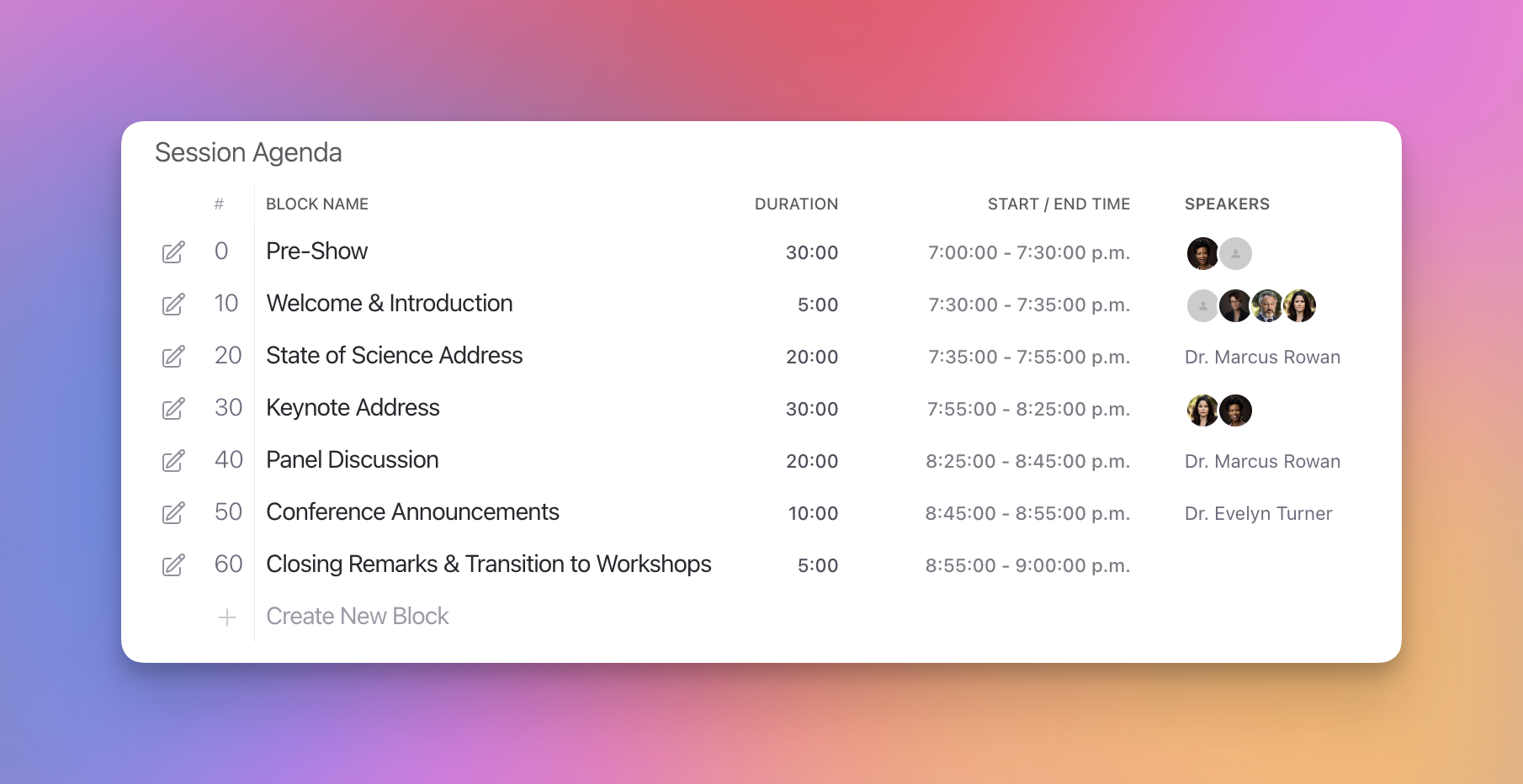
These blocks allow you to organize your show into manageable portions. You can rearrange your script any time by adjusting the block’s numbers.
You can create a new block from the session dashboard three ways:
- By clicking Create New Block from the very bottom of the session dashboard.
- By opening the Session Agenda and selecting Create New Block under the last created block.
- By hovering over the menu bar’s Edit option and selecting Block Builder.
Block Builder
The block builder is a table-like layout for creating and/or editing all of your blocks quickly and easily. Hover over the menu bar’s “Edit” option and select “Block Builder” to see all of your blocks, with their block numbers, names and durations and start/end times. Make quick updates, hit ‘save’ and head back to your newly updated script.
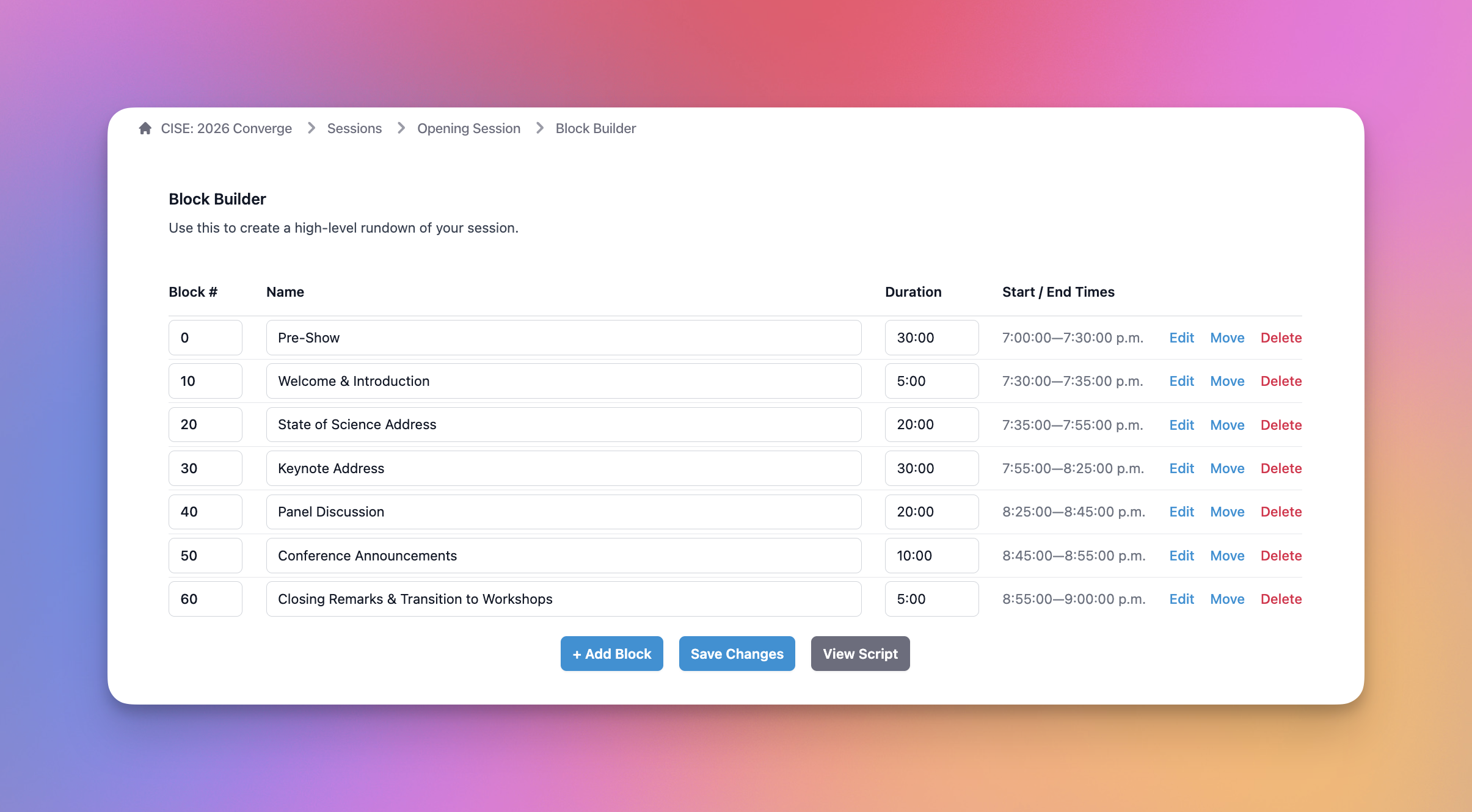
You can also move a block to a different session by clicking Move within the block builder.
Sections
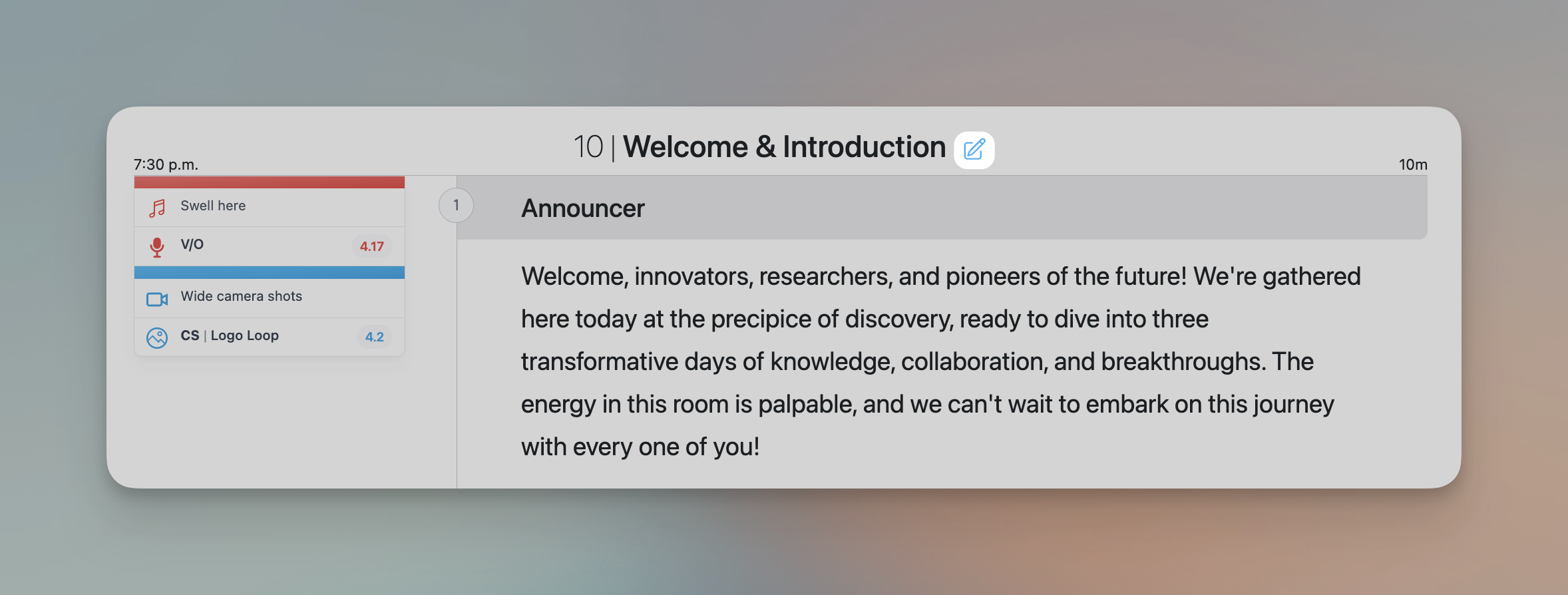
Within each block are individual sections. Each section has a sequential number, visible in the script. This is designed to help show callers refer to specific sections in a script.
These section numbers are automatically generated, which means they will change over time if you add, remove or rearrange sections.
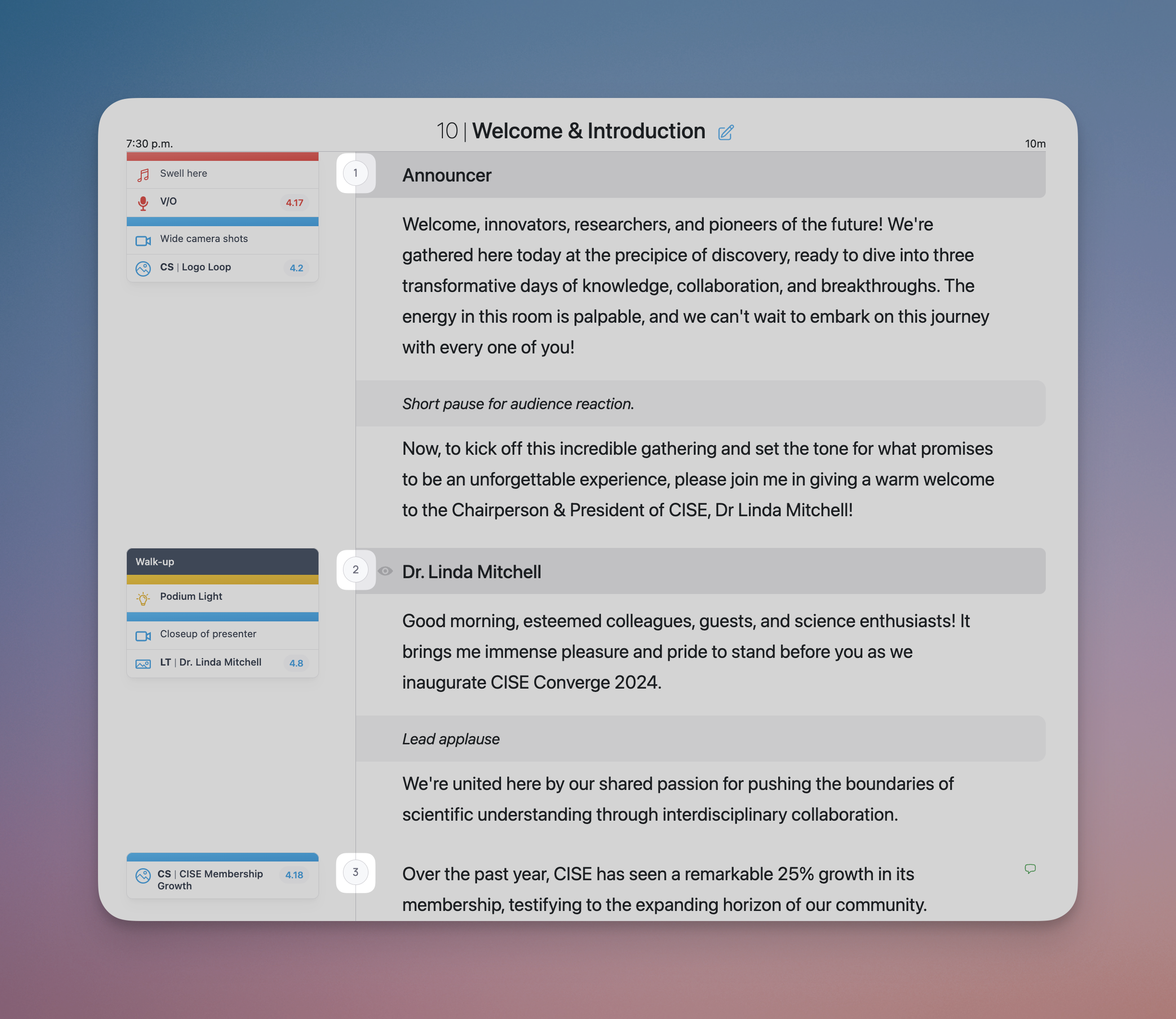
These sections allow you to type spoken word and stage direction in the main content area, and to identify who the speaker is for each section.
You can edit each section directly, in context with the rest of the script using the Section Menu Editor.
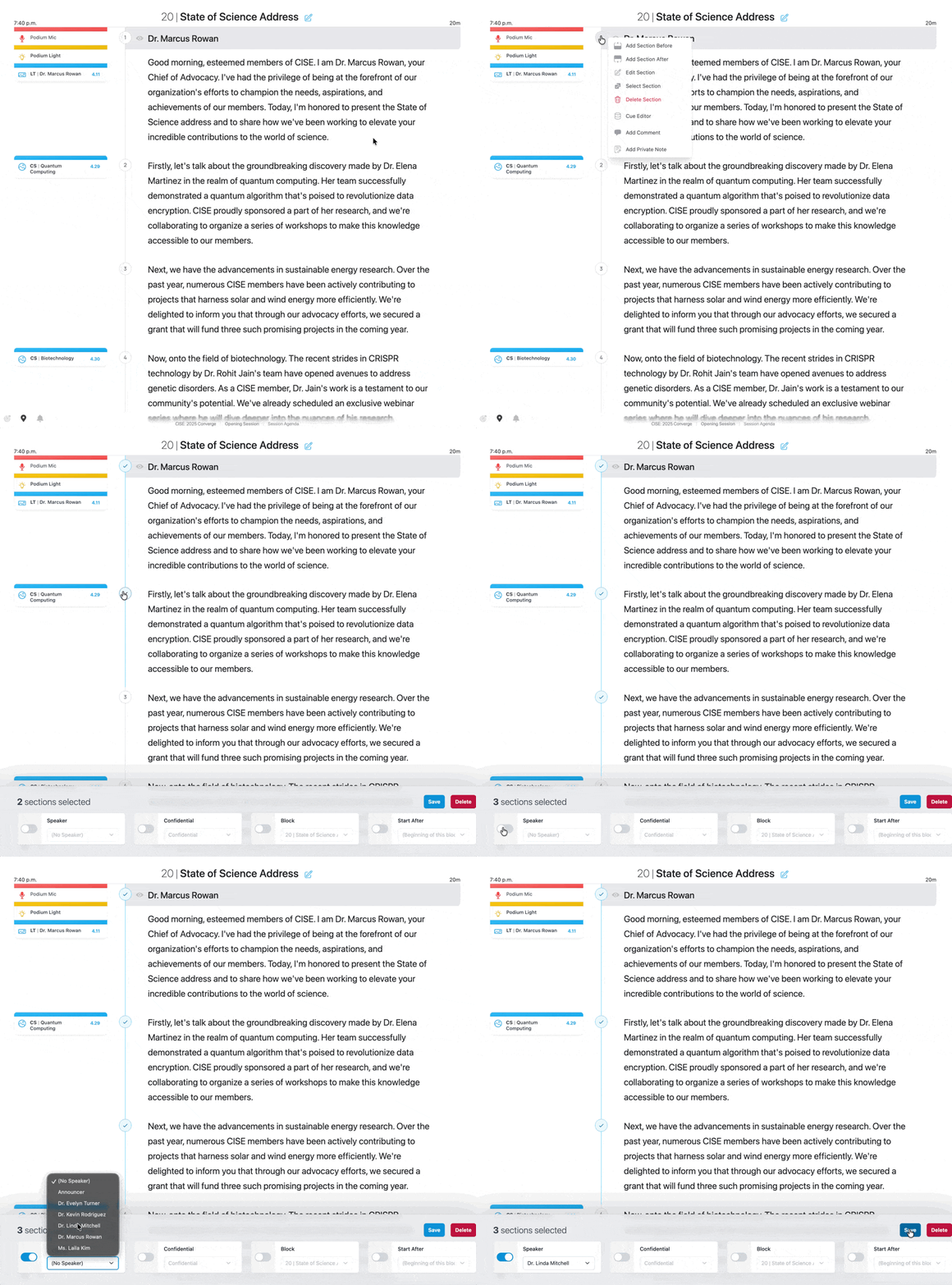
To make edits to each section, hover over or tap any section number to view the dropdown menu. The menu allows you to:
- Add Section Before
- Add Section After
- Edit Section
- Select Section
- Delete Section
- Cue Editor
- Add/Edit Comments
- Add/Edit/Delete Private Note
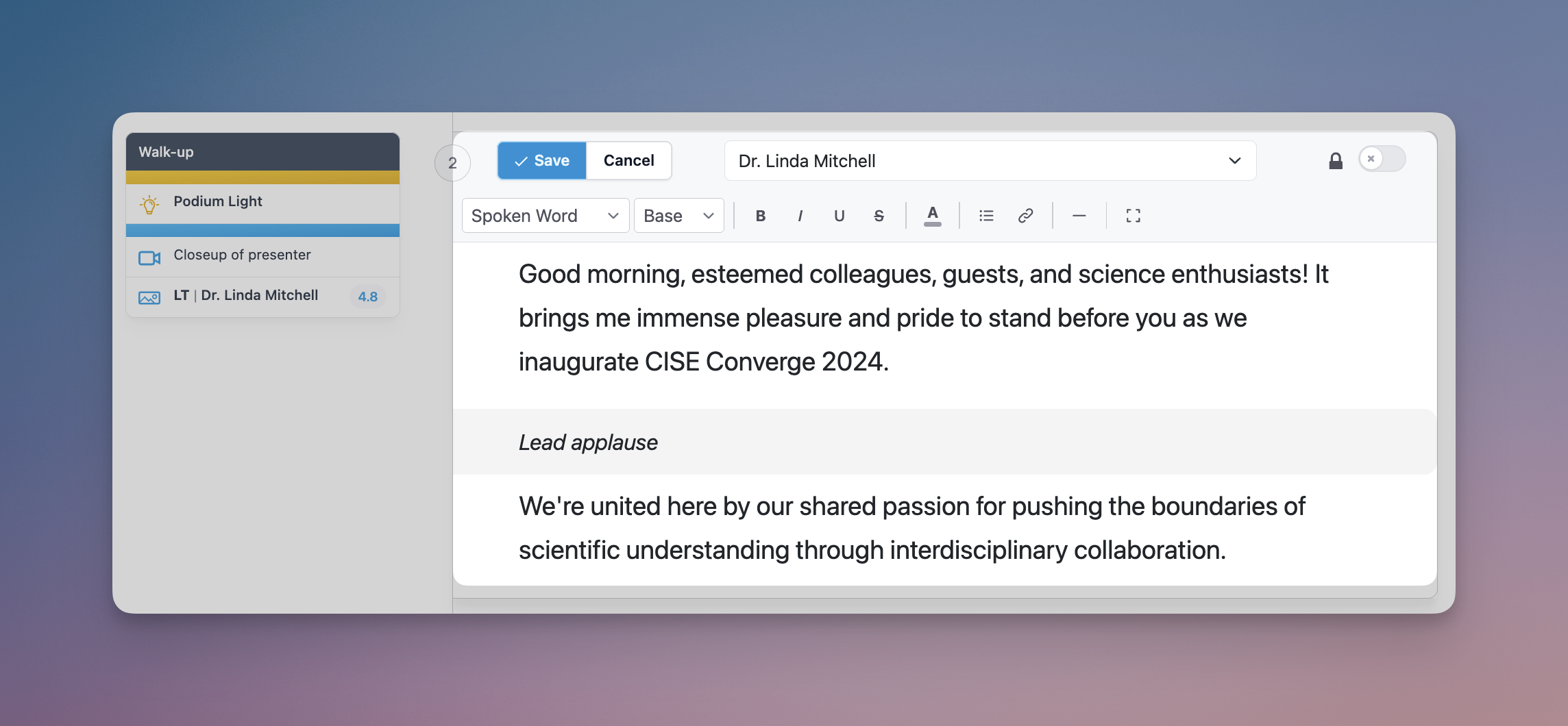
We support rich formatting with the text editor. Write your spoken word and stage direction in the section and click Save. Your edits to the script will be live immediately.
If you would like to edit block-by-block instead of with the full script, click on the edit icon to the right of the block name to be taken to the single block editor.
Rich Text Editor
The rich text editor has clear formatting options, supports dark mode and is easy to use. You can write Spoken Word or include Stage Direction, change font size or emphasize words with bold, italic or underlining. Adjust the color of text or highlight copy to set yourself reminders or make a note. The text editor also allows you to attach a speaker to the spoken word or set the section as confidential, giving only the highest user permission users access to seeing the content included.
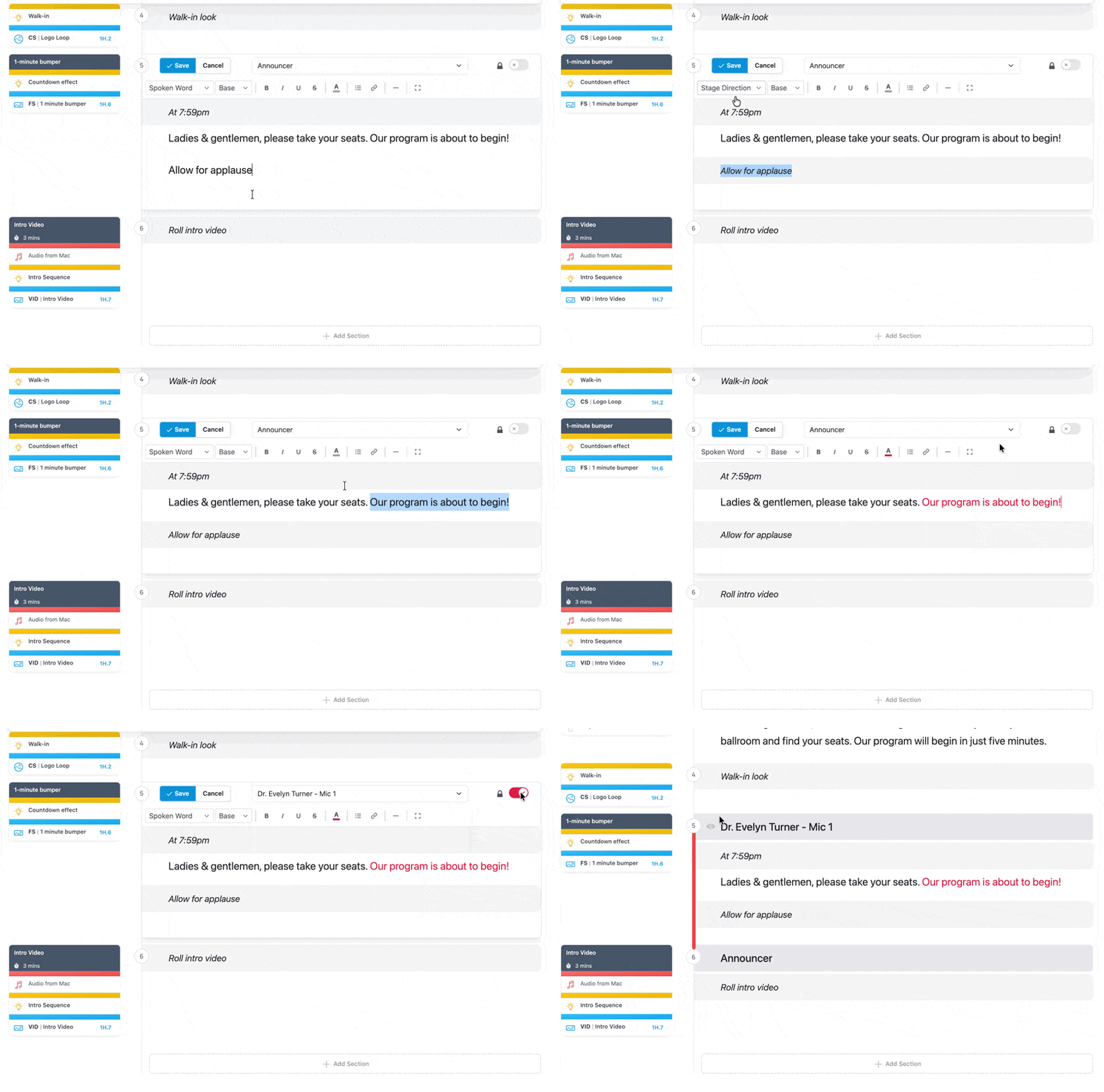
The rich text editor also supports the following custom keyboard shortcuts:
- Cmd+Shift+S: Toggle between our stage direction and spoken word formatting
- Option+Enter: Insert a section break (This action will split the section after clicking Save)
- Cmd+Shift+F: Toggle full screen
- Cmd+K / Cmd+V: Paste a link
- Cmd+Enter: Save your changes
- Escape: Cancel your changes
Estimated Speaking Time
At the bottom of every single block editor view, you can find its Estimated Speaking Time.
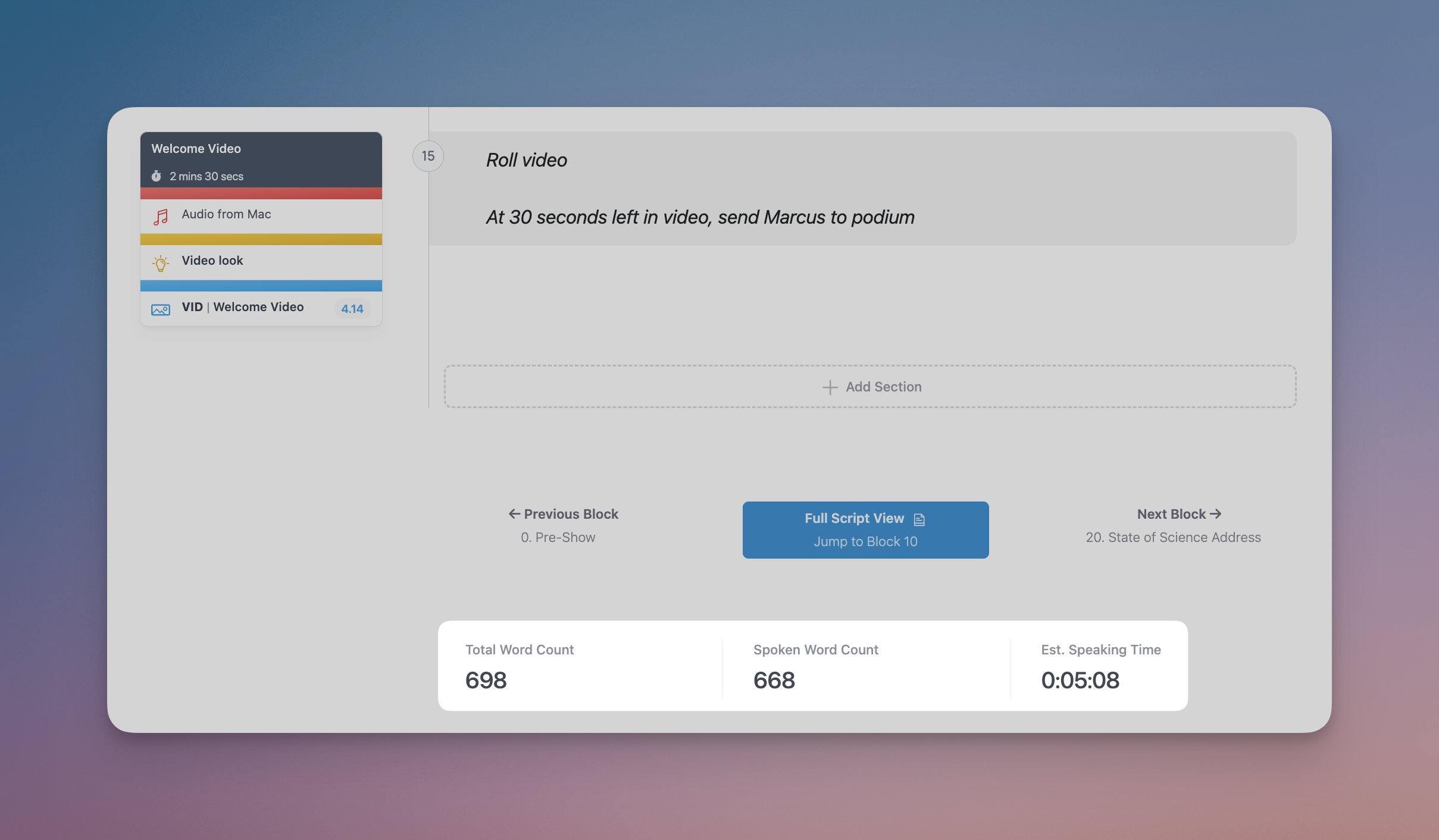
This analyzes the spoken word contents from each section within that block, and uses an average speaking rate of 130 words per minute to give you an estimated speaking time.
This estimate only includes spoken words, and does not include any cue durations. So if your block contains 5 minutes of estimated speaking time and also contains a 3 minute video, then you can expect that block to last approximately 8 minutes.
Cues
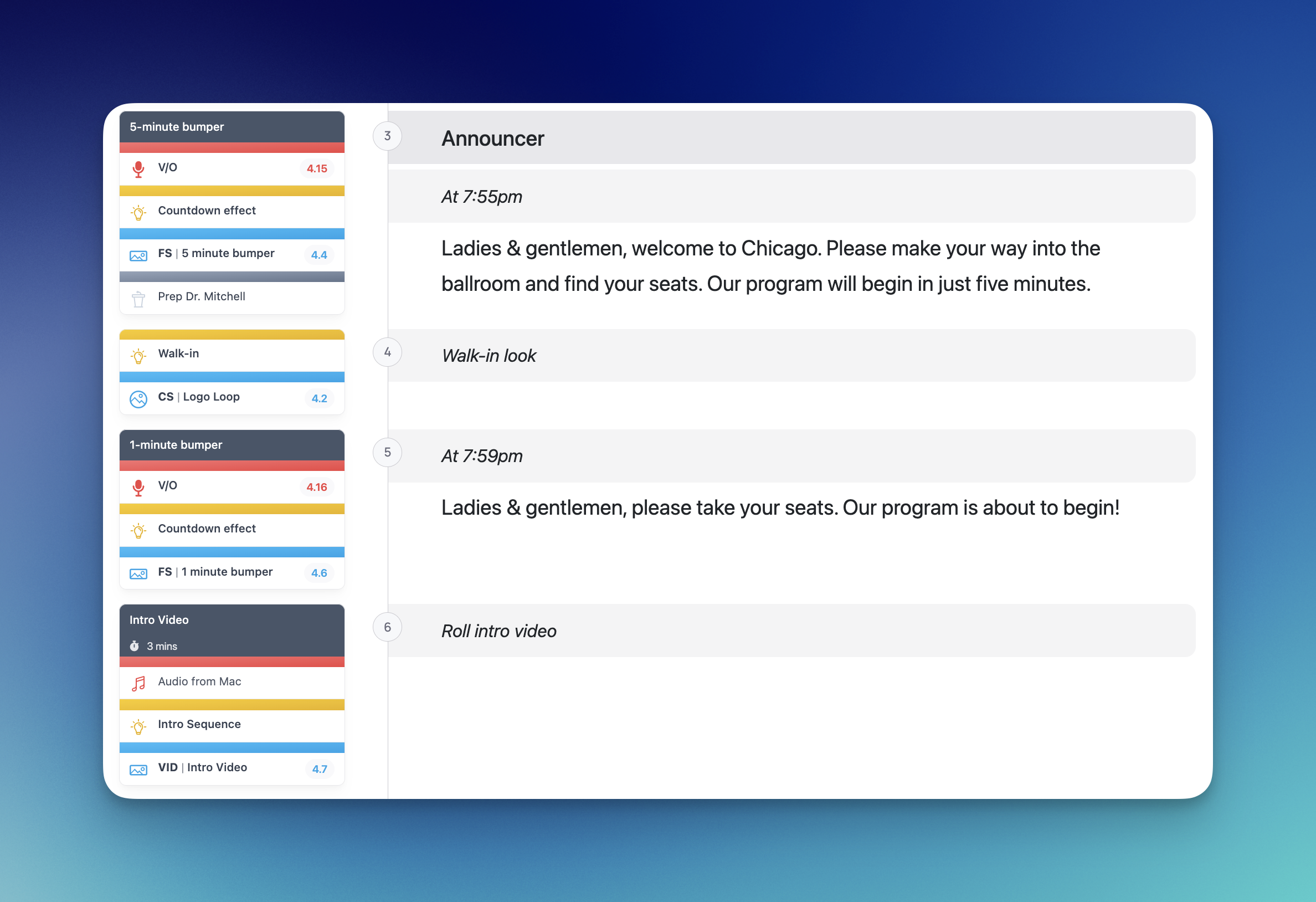
Finally, you can attach cues to each section. These cues allow you to describe actions that need to happen from multiple departments simultaneously.
For example, cuing an intro video sequence that requires lighting, audio and graphics operators to start their cues together.
Durations
Within each block, you can specify a target duration. If you do, then each block's target start time is automatically calculated based on the lengths of every block before it. These start times are visible in your session view, the full script and the run of show view, at the top of each block.
Selecting Multiple Sections
If you need to edit or move several sections at a time, you can do this by hovering over the section number and clicking Select Section. The bulk editor toolbar will appear at the bottom of your screen.
You can then use the toolbar to make bulk edits to the sections you selected.
Adding Cues
To add cues to your script, start by adding subdepartments to your production. Then see creating & editing cues.
Searching Scripts
You can search the section content across all sessions scripts in your production by clicking the search at the far-right tab of your production:
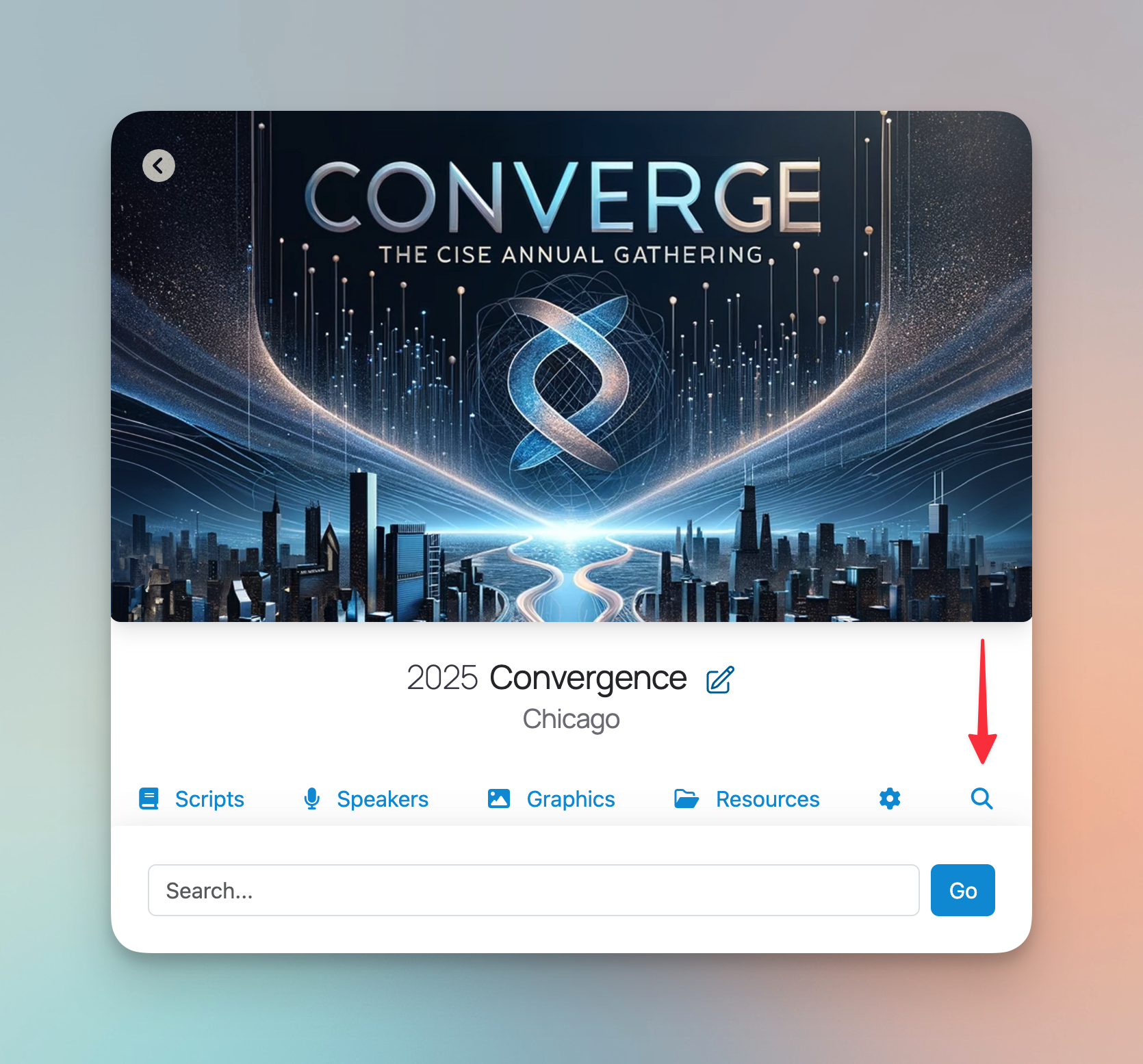
You can also find the search function from the session dashboard menu bar. Hover over the Review option, and click on Search. You’ll be redirected to the search page where you can search by session.